
Harmful Effects of UV on the Eyes: A Guide by the Nigerian Optometric Association, Lagos State Chapter
- July 31, 2024
- 1 Like
- 561 Views
- 0 Comments
Introduction
In Nigeria, where sunny days are abundant, it is essential to be aware of the harmful effects of ultraviolet (UV) radiation on the eyes. The Lagos State chapter of the Nigerian Optometric Association is dedicated to promoting eye health and educating the public on how to protect their vision from UV damage.
What is UV Radiation?
Ultraviolet radiation is a form of electromagnetic radiation from the sun. It is invisible to the naked eye and is classified into three types based on wavelength:
- UVA: Longest wavelength, can penetrate deep into the eye, potentially causing damage to the retina.
- UVB: Medium wavelength, primarily affects the cornea and lens.
- UVC: Shortest wavelength, mostly absorbed by the Earth’s atmosphere and does not reach the surface.
How UV Radiation Affects the Eyes
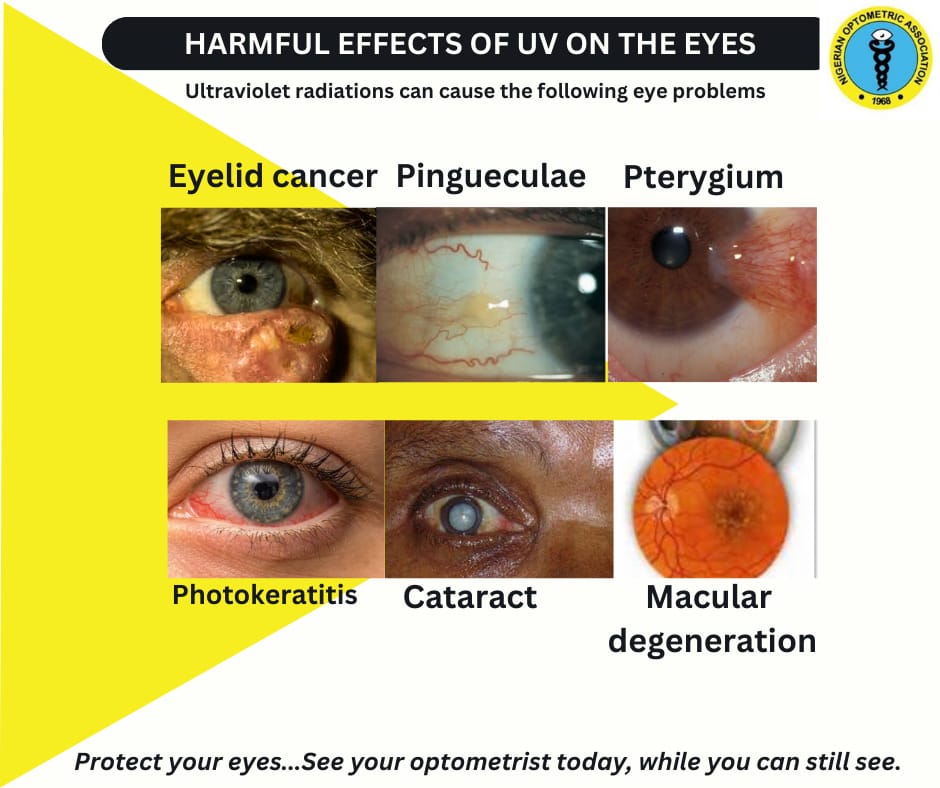
- Photokeratitis
- Also known as “sunburn of the eye,” photokeratitis is a painful condition caused by excessive exposure to UVB rays. Symptoms include redness, pain, blurriness, tearing, and temporary vision loss.
- Cataracts
- Prolonged exposure to UV rays can accelerate the formation of cataracts, a clouding of the eye’s lens that leads to decreased vision. UVB radiation is particularly harmful in this regard.
- Macular Degeneration
- UV radiation can contribute to the development of macular degeneration, a leading cause of blindness in older adults. The condition affects the macula, the part of the retina responsible for central vision.
- Pterygium
- A pterygium is a benign growth on the conjunctiva that can extend onto the cornea, potentially obstructing vision. It is commonly seen in individuals who spend significant time outdoors without eye protection.
- Skin Cancer
- The skin around the eyes, including the eyelids, is susceptible to UV-induced cancers such as basal cell carcinoma, squamous cell carcinoma, and melanoma.
Protecting Your Eyes from UV Damage
- Wear UV-Protective Sunglasses
- Choose sunglasses that block 100% of UVA and UVB rays. Wrap-around styles offer additional protection by preventing UV rays from entering the eyes from the sides.
- Use Hats and Caps
- Wearing a wide-brimmed hat or cap can reduce the amount of UV radiation reaching your eyes by up to 50%.
- Avoid Peak Sun Hours
- Limit outdoor activities during peak sun hours (10 a.m. to 4 p.m.) when UV radiation is strongest.
- Use UV-Blocking Contact Lenses
- If you wear contact lenses, opt for those with UV protection. However, they should not replace sunglasses, as they do not cover the entire eye.
- Regular Eye Exams
- Regular visits to an optometrist can help detect early signs of UV damage and other eye conditions. Early intervention is crucial for maintaining eye health.
Conclusion
Protecting your eyes from the harmful effects of UV radiation is crucial, especially in sunny climates like Nigeria. By taking simple precautions such as wearing UV-protective sunglasses, using hats, and avoiding peak sun hours, you can safeguard your vision and reduce the risk of UV-related eye conditions. The Nigerian Optometric Association, Lagos State chapter, encourages everyone to prioritize eye health and make informed choices to protect their sight.


Leave Your Comment